
The Dumbphone Paradox: Why High-Tech Professionals are Paying to Downgrade Their Screen Time
The Attention Economy is facing a rebellion. Discover the physical friction hacks, minimalist hardware, and architectural systems elite digital creators are using to reclaim deep focus.
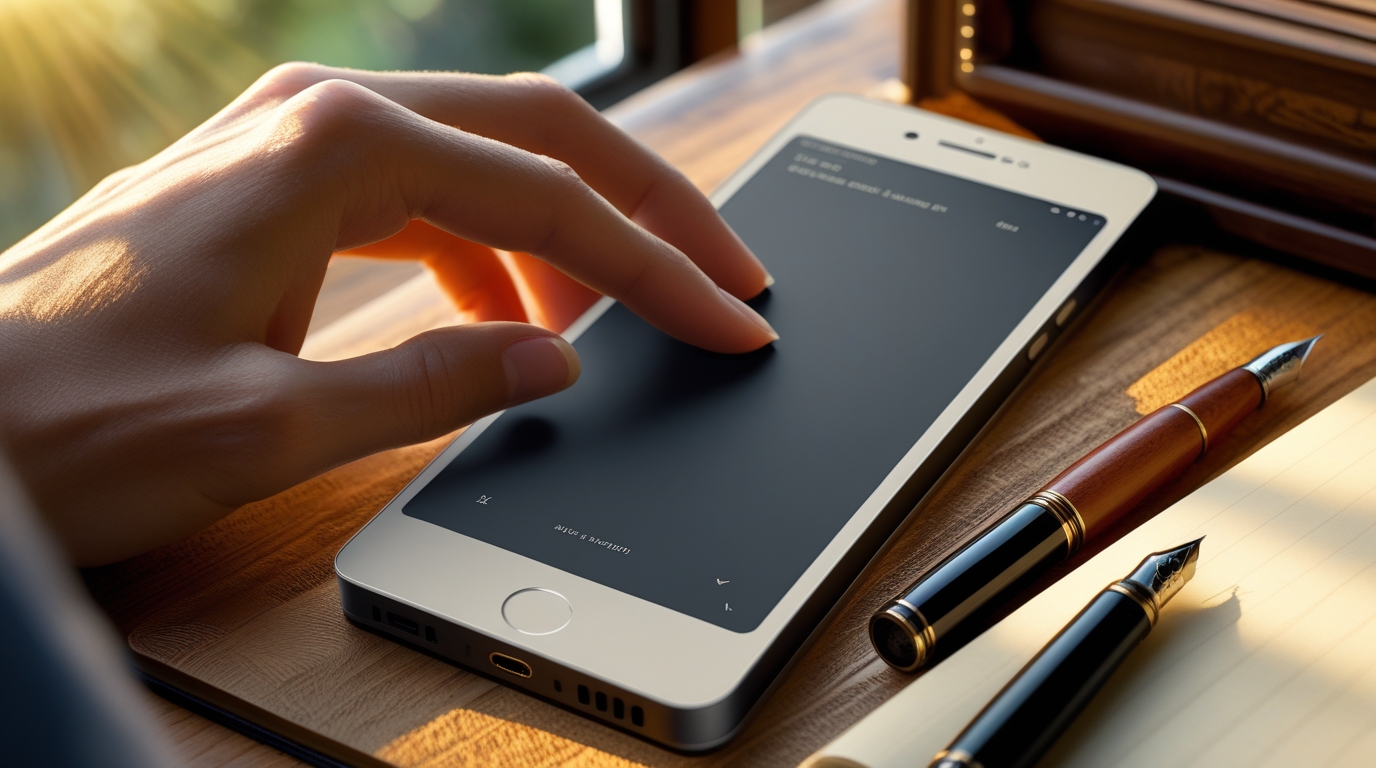
We have officially surpassed peak digital saturation.
For the past decade, the dominant narrative in tech, productivity, and lifestyle engineering was centered around optimization via software. If you couldn't focus, the solution was to download a better minimalist calendar, install an aggressive website blocker, or gamify your habit tracking. We treated our smartphones as indispensable command centers, believing that the right configuration of pixels could somehow save us from the very distractions those pixels created.
But something fundamental has broken in the relationship between humans and their screens.
The tech elite—the full-stack developers, system architects, startup founders, and senior digital creatives who originally helped construct the modern attention economy—are staging a quiet, calculated rebellion. They aren't just deleting social media apps; they are actively paying to downgrade their physical hardware.
The breakout trend dominating search engines features terms like "dumbphones," "minimalist e-ink devices," and "analog focus blocks." High-performing knowledge workers are trading in flagship smartphones for low-tech alternatives that lack web browsers, social feeds, or color screens.
This isn't an anti-tech movement or a romantic retreat into luddism. It is a highly analytical, strategic deployment of environmental architecture. These creators have realized a brutal truth: the human brain cannot consistently win a willpower battle against thousands of elite software engineers working behind a screen to harvest your dopamine.
The only way to win the attention war is to change the playing field by introducing physical friction.
1. The Real Cost of Fragmented Attention
To understand why people are spending hundreds of dollars on phones that do less, we must look at the hidden tax of the modern notification cycle: Cognitive Context Switching.
Every time your smartphone screen lights up with a push notification, an email alert, or a message, your brain suffers a microscopic disruption. Even if you do not actively pick up the device to read the message, simply registering the flash of light forces your prefrontal cortex to expend energy to inhibit the urge to check it.
According to landmark research into workplace productivity, it takes an average of 23 minutes and 15 seconds to return to a state of deep, uninterrupted focus after a single external distraction.
If you check your smartphone just three times an hour, your brain never reaches flow state—that deep, highly productive neurological zone where your highest-tier problem solving, creative thinking, and system architecture design occur. Instead, you spend your entire working day in a state of continuous partial attention. You feel exhausted, yet you finish the day wondering why you only completed shallow, reactive tasks like answering emails and Slack threads, rather than making progress on your core development projects or high-value business assets.
The emerging elite class of digital creators recognizes that intense concentration is the ultimate competitive edge. In a world where basic writing, code generation, and administration can be handled by algorithms, the only human asset that retains premium economic value is the ability to solve highly complex, non-linear problems. And that ability requires long, uninterrupted blocks of time.
2. The Rise of Physical Friction and Minimalist Hardware
The foundational flaw of focus apps and software blockers is that they exist on the same interface as your distractions. It is far too easy to click "Disable for 15 minutes" on an app blocker when a wave of professional frustration hits. Minimalist hardware solves this problem by moving the boundaries of your digital environment out of software and into physical reality.
Minimalist Mobile Hardware
Devices like the Light Phone, the Punkt MP02, and e-ink mobile phones are exploding in popularity among tech professionals. These devices purposefully utilize electronic ink (e-ink) screens that refresh slowly and display text strictly in grayscale. By removing color, blue light, and smooth scrolling animations, the phone ceases to be an attractive destination for your brain's reward centers. It becomes what a phone was always meant to be: a boring, purely functional utility tool for phone calls, basic text messaging, and essential navigation.
The "Analog Desk" Movement
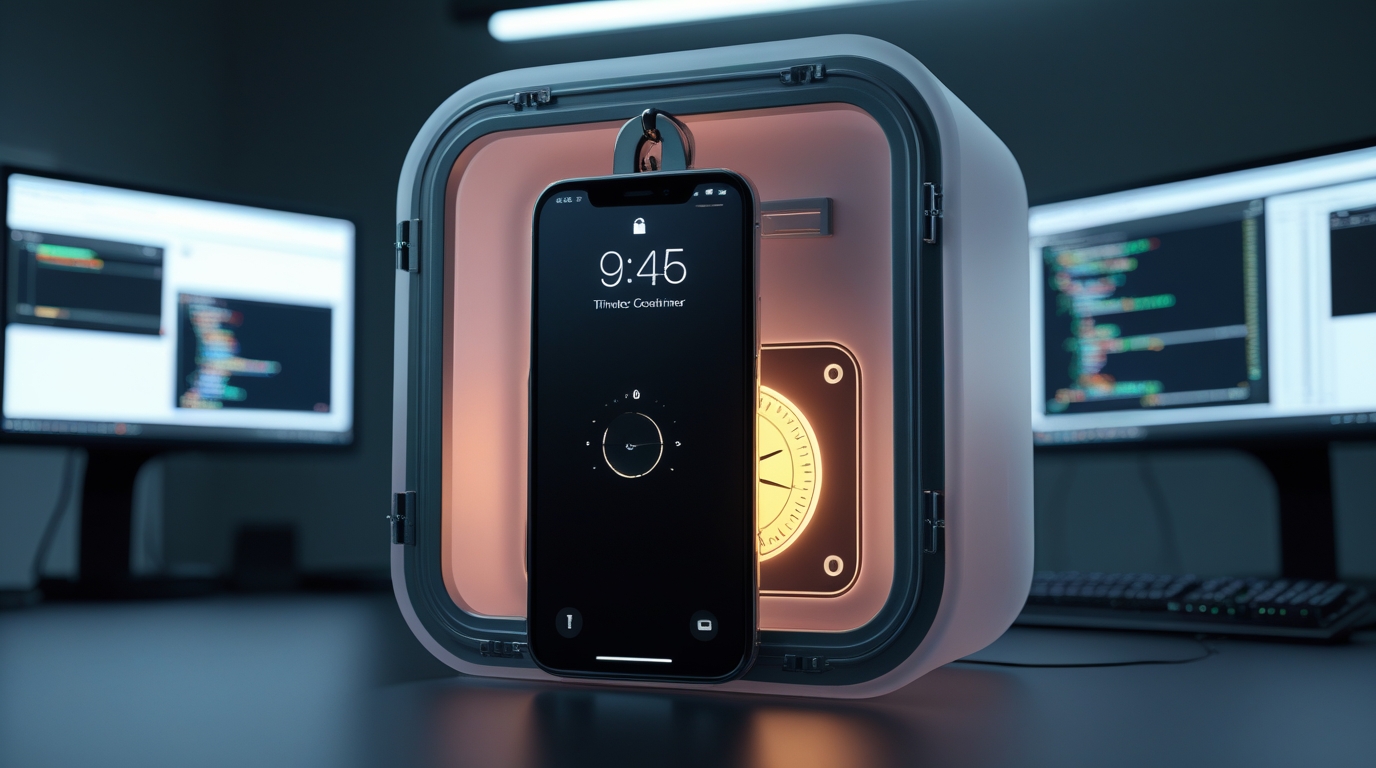
Alongside minimalist phones, creators are building physical friction zones directly onto their workspaces. This includes tools like heavy, mechanical focus cubes that track work segments through orientation changes, physical lockboxes with mechanical countdown timers for smartphones, and completely analog journaling systems for task management.
3. The 3-Step Strategy to Reclaim Your Focus Architecture
Transitioning away from a hyper-connected state doesn't mean leaving modern convenience behind or tanking your professional productivity. The goal is to build a highly optimized, automated ecosystem where your business, your career assets, and your lifestyle are structurally aligned to protect your mind.
Here is the exact three-part architecture elite digital producers are implementing to decouple their personal attention from repetitive operational loops:
Step 1: Automate Your Business Infrastructure (Outsource the Loop)
Much of our screen addiction stems from a false sense of operational necessity. We tell ourselves we must constantly check our devices because we need to verify lead pipelines, track analytics, manually format marketing assets, or respond instantly to basic inbound client inquiries. This constant checking keeps us trapped in low-leverage execution loops.
The fix is to shift your entire operational paradigm from manual interaction to an automated digital ecosystem. By deploying decentralized, autonomous digital workflows that communicate across platforms using standard data protocols, your infrastructure can execute complex, multi-step business routines without needing your eyes on a screen.
When your lead generation, distribution networks, and content pipelines are handled by independent, self-correcting systems that only alert you when human intervention is absolutely mandatory, the psychological urge to constantly check your phone vanishes. To learn how to transition your business from simple chatbots to fully autonomous operational networks, study our comprehensive roadmap on Agentic AI: How to Hire Your First "Autonomous Employee" in 2026.
Step 2: Optimize Your Career Assets for Autonomous Gatekeepers
If you are actively seeking new professional milestones, consulting contracts, or high-tier engineering roles, the traditional approach involves endless hours of screen time: scrolling through job boards, manually filling out application portals, and rewriting CVs for individual listings. This process is a massive drain on your focus.
The modern reality is that human eyes rarely conduct the initial filtering of talent. Recruitment infrastructures utilize deep-learning algorithms to scan profiles for semantic skills context and potential career trajectory long before a human hiring manager is involved.
Instead of fighting this system through manual volume, optimize your digital footprint once and let the algorithms do the work for you. By engineering your professional profiles and portfolios to align perfectly with these automated parsing parameters, you ensure your background gets flagged by the right tracking engines effortlessly. This cuts out hundreds of hours of aimless digital grinding, allowing you to close your laptop and stay offline. To implement this structural framework, read our expert breakdown on AI Resume Optimization in 2026.
Step 3: Map Your Natural Cognitive Cycles
A physical digital detox will inevitably fail if you do not replace screen time with a deeper, systemic understanding of your internal biological wiring. Many professionals face chronic focus issues simply because they try to force themselves into generic, rigid routines that actively fight their natural cognitive rhythms.
Every individual operates on distinct internal cycles that dictate daily peaks and valleys in mental energy, creative processing power, and logical calculation capabilities. Rather than trying to force deep work during an internal energy trough, elite creators use precise, structured data frameworks to calculate their ideal personal timelines.
By analyzing your core biographical data against established analytical patterns, you can build a highly accurate, customized roadmap that pinpoints your optimal focus windows and natural rest periods. To generate your own personalized calculation map completely free of charge, see The Ultimate Guide to AI Numerology in 2026: Decode Your Cosmic Blueprint for Free.
4. The Economics of Deep Focus
When you structurally remove digital friction from your day, the economic returns are immediate and compounding. Knowledge workers who transition to minimalist hardware configurations and automated back-office frameworks consistently report a 3x to 4x increase in deep work output.
| Focus Metric | Hyper-Connected Workspace | Attention Architect Workspace |
| Daily Deep Work Windows | 45 – 60 mins ( fragmented ) | 3 – 4 Hours ( completely uninterrupted ) |
| Cognitive Recovery Time | Up to 2 hours lost per day | 0 minutes lost |
| Primary Work Mode | Reactive (Answering alerts) | Proactive (Building core architecture) |
| Mental Fatigue Levels | Chronic / High | Low / Managed |
By protecting your mind from micro-distractions, you shift your daily efforts away from superficial coordination tasks and toward high-leverage execution. You stop spending your life adjusting parameters inside software interfaces and start building systems that scale.
5. Deconstructing the Digital Dopamine Loop: The Neurobiology of Scrolling
To successfully execute an environmental downgrade, you must first understand the specific neurochemical matrix you are fighting. The human brain did not evolve to handle the modern smartphone interface. Every scroll, pull-to-refresh mechanism, and notification badge is engineered around a psychological principle known as Variable Reward Schedules—the exact same mechanism that makes slot machines addictive.
When you open a social application or check your email, your brain does not release dopamine because it encounters a piece of good news. It releases dopamine in anticipation of the unknown reward.
The Blueprint: If every notification you received was identical, the behavioral loop would quickly extinguish.
The Reality: Because an icon could mean a life-changing client inquiry, a critical system error, or a meaningless social media like, your brain treats the device as an infinite slot machine.
Over time, chronic exposure to these high-frequency, variable micro-rewards alters your baseline neurological threshold. The reward pathways in the brain become desensitized to slow, steady, non-linear tasks—such as writing complex algorithmic logic, designing system architectures, or reading dense technical documentation.
When your baseline dopamine threshold is unnaturally elevated by a high-contrast smartphone screen, sitting down to do deep work feels physically painful. Your brain interprets the quiet, low-stimulus environment of focused production as a state of sensory deprivation, triggering an intense, subconscious urge to reach for a mobile device.
Downgrading your physical hardware is the fastest way to manually lower that dopamine baseline, allowing your brain to regain its natural capacity for long-form concentration.
6. The "Silent Tech Stack": Building an Inbound Focus Ecosystem
Shifting away from continuous connectivity requires you to re-engineer your inbound communication architecture. If you simply switch to a minimalist e-ink phone without altering how clients, colleagues, and team members reach you, your professional relationships will suffer from friction.
You need to establish an ecosystem that prioritizes asynchronous communication, filtering inputs long before they ever reach your immediate awareness.
Establish Tiered Communication Vectors
The primary mistake professionals make is using their personal mobile number as a universal entry point for all channels. To protect your attention, split your incoming communication channels into distinct, isolated layers based on urgency and operational leverage:
Layer 1: Synchronous Emergency Channels (Voice Calls Only). Your minimalist device should only accept direct voice calls from a highly restricted whitelist—your core team members, your family, or key project stakeholders. This ensures that when your device rings, it demands immediate attention.
Layer 2: Asynchronous Business Logic (Slack / Email / CRM). These platforms should never be installed on any mobile screen. They must live exclusively on a primary hardware workstation. By restricting communication tools to a physical desk, you transform communication back into a deliberate, bounded task rather than a continuous background distraction.
Layer 3: Automated Triaging Sub-Systems. Use centralized data middleware to automatically screen incoming emails and support inquiries. If a client emails asking a basic onboarding question, an automated workflow should route them to a documentation portal instantly. This filters out the operational noise so that when you sit down at your workstation, you only address high-priority tasks that require deep human evaluation.
7. Overcoming the Digital Withdrawal Phase
When you first implement physical friction and switch to a minimalist device, you will experience a distinct, psychological withdrawal period that typically lasts between 4 to 7 days. Understanding this phase prevents you from abandoning your focus strategy when discomfort peaks.
Phase 1: Phantom Vibration Syndrome (Days 1–2)
During the first 48 hours, your brain will continue to operate on its deep-seated behavioral conditioning. You will experience a compulsive impulse to reach into your pocket or tap your desk every few minutes.
Many professionals report feeling "phantom vibrations"—the distinct sensation that their phone is buzzing in their pocket when it is sitting across the room. This is a clear indicator of how deeply your nervous system has been wired to monitor external digital stimuli.
Phase 2: The Boredom Spurt (Days 3–5)
As the phantom urges begin to subside, you will hit a wall of intense boredom. When walking in an elevator, standing in line, or waiting for a script to compile, your brain will scream for a quick hit of stimulation.
This phase is critical. If you fill these micro-moments with a secondary digital screen (like opening social feeds on a work laptop), you reset your recovery timeline. If you allow yourself to experience the boredom, your mind will naturally begin to wander, sparking unexpected creative solutions to the code or business challenges you are working on.
Phase 3: The Flow State Renaissance (Days 6+)
By the end of the first week, your dopamine baseline begins to normalize. You will notice a profound shift in your cognitive endurance.
Tasks that previously felt exhausting—like sitting down for three uninterrupted hours to map out an application's database schema—will become effortless. Your mind will stop fighting the lack of stimulation and begin thriving on the immense clarity of deep, focused execution.
8. Designing for Longevity: The Ultimate Focus Playbook
Reclaiming your mind from screen dependency is not an all-or-nothing lifestyle choice. It is about building a sustainable, long-term framework that allows you to leverage high-tier technology without letting it compromise your attention span.
The most successful tech producers, full-stack engineers, and digital entrepreneurs do not completely delete their digital footprints. Instead, they act as strict environmental architects—automating their workflows, letting deep-learning systems optimize their career visibility, and matching their active focus windows to their natural energetic blueprints.
When you step away from the continuous notification loop, you aren't falling behind. You are stepping into the exact zone where your most valuable work is produced.
To completely solidify your digital architecture, ensure you have implemented the three core operational pillars outlined across our deep-dive series:
Your AI Communication Stack: Stop guessing how to get clean outputs from large language models. Learn the precise semantic formatting, multi-persona frameworks, and advanced system instructions that elite developers use to bypass generic chat responses. Master the exact inputs in our blueprint on
Prompt Engineering: How to Talk to AI in 2026 Your Personalized Learning Engine: Don't let rigid, legacy educational systems dictate your technical growth. Discover how to turn standard cloud AI models into hyper-adaptive, 24/7 personal mentors that translate complex software code, database architecture, and advanced mathematics into simple, interactive lessons tailored to your exact learning speed. See the setup workflow in our comprehensive guide on.
Intentionality Over Connectivity
The "dumbphone" movement is not a temporary design trend or a superficial wellness fad. It is an essential evolutionary adaptation to an environment that has become hostile to human concentration.
True professional freedom and digital minimalism aren't achieved by completely disconnecting from the modern world; they are achieved through intentional architecture. By outsourcing your operational overhead to automated back-office workflows, optimizing your professional profiles for high-speed tracking systems, and mapping your daily schedule to your unique personal blueprint, you can step away from the glossy screen with absolute confidence.
Stop letting your devices dictate the boundaries of your attention. Head over to The Bloggers Content today to access the step-by-step blueprints, prompts, and frameworks to reclaim your focus and master your environment.