
AI in Education 2026: How to Study with AI Tutors Without Losing Your Edge
A Comprehensive Guide to Personalized Learning, Top AI Tools, and Mastering the Socratic Method.
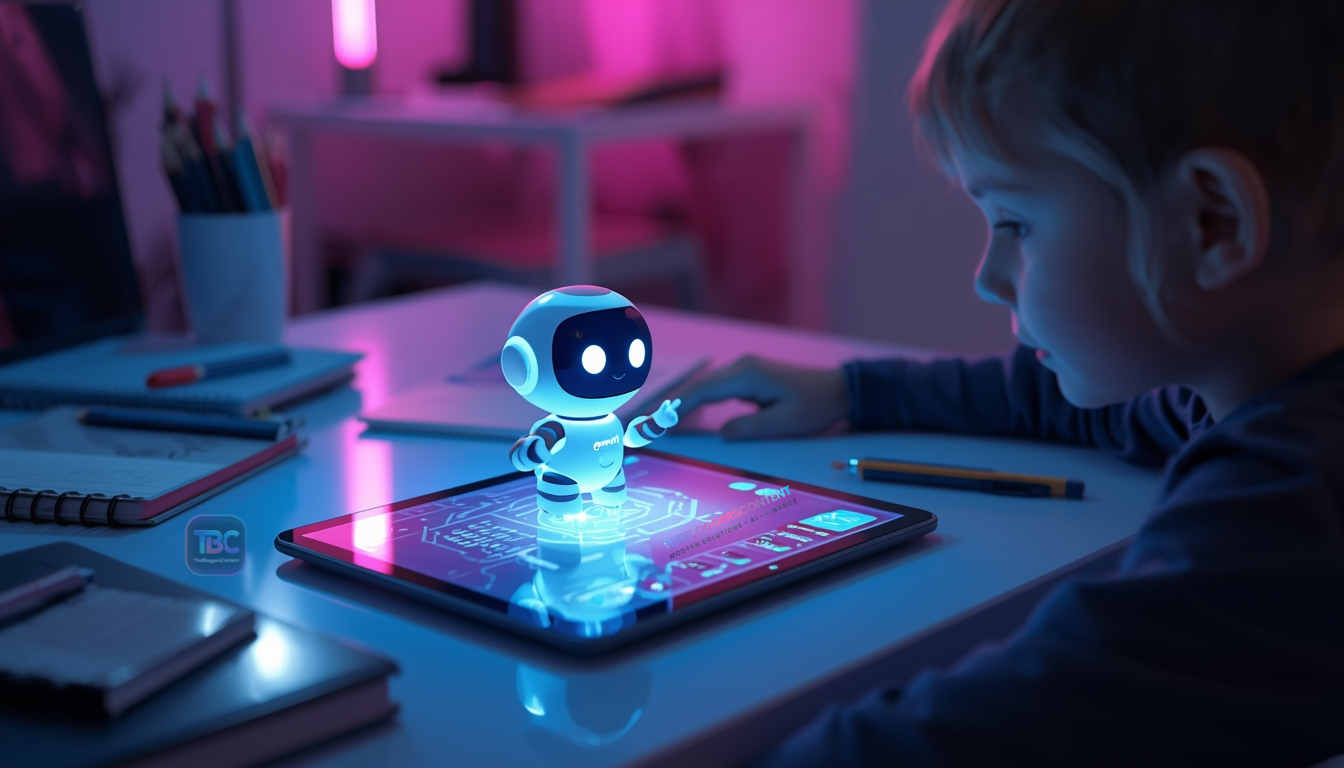
AI in Education: How Students are Using Personal Tutors
Imagine a student in 2026, struggling with a complex fluid dynamics problem at 2:00 AM. In the past, they would have been stuck until the next lecture. Today, they simply toggle their AI Study Agent into Socratic Mode. The AI doesn't just hand over the answer; instead, it asks, "Looking at the Bernoulli equation you just wrote, how does the change in pipe diameter affect the fluid velocity?"
By 2026, the global education landscape has shifted from "searching for answers" to "interacting with intelligence." Over 86% of students now utilize personalized AI tutors to navigate their curriculum. However, as these tools become more powerful, understanding the nuance of how to use them is the difference between academic mastery and a simple copy-paste error.
How to Start with Studies with AI: A Step-by-Step Guide
Starting your journey with AI-assisted learning isn't just about opening a chat box. To truly benefit, you need a workflow that prioritizes your own brain's growth.
- Identify Your Goal: Are you looking for a quick summary or a deep conceptual understanding? Define this before you prompt.
- Choose the Right Tool: Use "Grounded" tools like NotebookLM for your own notes, or Perplexity for web-based research.
- Set the Persona: Tell the AI, "You are a Socratic tutor for a 2nd-year Medical student. Do not give me answers; guide me with questions."
- Upload Your Context: Always provide your syllabus or specific chapter PDFs to ensure the AI doesn't drift into unrelated topics.
- Master the Ask: Effective AI use requires knowing how to frame prompts.
How AI Can Help in the Study: Real-World Applications
AI in 2026 isn't just for writing essays. It has moved into practical, multimodal assistance that spans every subject, from coding to the creative arts.
For subjects like Engineering, Physics, and Math, accuracy is everything. AI tools now use symbolic logic to ensure math isn't just "guessed" based on patterns, but calculated using actual rules of logic.
- Step-by-Step Breakdown: Ask the AI to explain the logic between lines of an equation.
- Visual Recognition: Snap a photo of a circuit diagram and ask the AI to identify potential short circuits based on your lecture's theory.
- Code Debugging: Use GitHub Copilot to not just fix code, but to explain why a specific memory leak occurred in your C++ project.
2. Mastering Theoretical & Humanities Subjects
Subjects like History, Philosophy, or Literature require synthesis and critical thinking rather than just "the right number."
- Thematic Synthesis: Upload three different historical perspectives on the Industrial Revolution and ask the AI to map out the commonalities and contradictions.
- Argument Strengthening: Ask the AI: "What is the strongest possible counter-argument to my thesis on existentialism?" This forces you to defend your position.
The era of rote learning is hitting a wall. In a competitive landscape like India, the shift from 'Ratta' to deep conceptual understanding is no longer optional—it’s the new standard. AI is the tool that makes this transition possible, helping students tackle grueling exams like JEE or UPSC by focusing on the 'how' and 'why' rather than just the 'what'
The 2026 AI Toolbox: Leading Tutors & Resources
Below is a curated list of the most effective AI tools currently used by high-performing students. Note that while some are free, others are high-end professional tools designed for deep research.
- Khanmigo by Khan Academy (Best for K-12)
- Feature: Uses Socratic dialogue to prevent cheating and encourage thinking.
- Cost: ~$4/month for learners (Free for many school districts).
Link: Visit Khanmigo
- Perplexity Pro (Best for Academic Research)
Link: Visit Perplexity
- NotebookLM by Google (Best for Note-taking)
Link: Visit NotebookLM
- Google AI Ultra (Best for PhD & Data Science)
Link: Visit Google Gemini
- ibl.ai (Best for Higher Ed)
Why You Shouldn't Trust AI Too Quickly: Understanding "Misunderstandings"
It is critical to realize that AI is not "wrong" in the way a human is wrong. It doesn't lie; it misunderstands. AI is a probabilistic engine—it predicts the most likely next word. If your prompt is vague, or if the AI reaches the edge of its training data, it will fill the gaps with "plausible-sounding" but potentially fabricated information.
How to Study with AI Safely
To get the most out of AI, you must understand its core mechanism: Next-Token Prediction. It doesn't "know" facts; it recognizes patterns. Therefore, you must be the "Human-in-the-loop."
- The Hallucination Trap: AI may invent historical dates or scientific studies to satisfy a query. Always "Reverse-Search" a citation.
- The Cognitive Crutch: If you let the AI write your homework entirely, your brain "muscle" for that topic withers. You will fail when the technology isn't available.
- Confidence Bias: AI is designed to sound authoritative. A polished, fluent tone does not equal truth.
The Art of the Double-Check
Follow the "Triple-Verify" workflow before submitting any major assignment:
- Source Check: Ask the AI for the direct URL. If it's a dead link, discard the fact.
- Cross-Model Check: Paste the output into a different AI (e.g., Gemini to Claude) and ask it to find errors.
- Human Check: Compare the AI's terminology with your physical textbook's glossary.
Reality Check: AI is incredibly good when you get the hang of it, but it lacks "Embodied Experience." It hasn't lived in the world. Always verify high-stakes medical, legal, or safety-critical data using primary sources.
Security and Human-in-the-Loop: Why Teachers Still Matter
In 2026, we have learned that AI is a co-pilot, not the captain. The Human-in-the-Loop (HITL) model is essential for ethical education. While an AI can grade a math quiz in seconds, it cannot understand why a student is suddenly failing—perhaps due to personal stress or a specific learning disability like dyslexia.
Teachers in 2026 have transitioned from "lecturers" to "mentors." They use the data provided by AI tutors to identify at-risk students earlier than ever before. AI handles the "Knowledge Transfer," while humans handle the "Wisdom and Ethics."
FAQs: People Also Ask
1. Is using an AI tutor considered cheating in 2026?
No, as long as it’s used for "Socratic Assistance." Most 2026 educational platforms are "Locked Tutors," meaning they are programmed to guide you to the answer with hints rather than writing the essay for you.
2. Why are some AI tools like 'Google AI Ultra' so expensive?
These high-cost tiers ($249/mo+) provide specialized "Reasoning Models" and massive cloud infrastructure for data-heavy research, which costs the provider a significant amount in electricity and GPU power.
3. Can AI tutors help with learning disabilities like Dyslexia or ADHD?
Yes. This is one of AI's biggest wins. AI can instantly turn a 50-page PDF into a 10-minute "Audio Overview" (via NotebookLM) or a simplified bulleted list, making information accessible to everyone.
4. Will AI eventually replace human teachers?
In 2026, the consensus is No. AI handles the "Knowledge Transfer" (the facts), but humans handle the "Mentorship" (the motivation, ethics, and career guidance).
Final Thought
The tutor of 2026 is no longer a luxury for the wealthy; it is a digital right for the curious. When used as a ladder rather than a crutch, AI allows every student to climb at their own pace.
Related Resources
Disclaimer: This article is for informational purposes only. While AI tools can significantly enhance learning, academic results depend on individual effort and institutional policies. AI-generated content should always be verified for accuracy, especially in professional or safety-critical fields.